

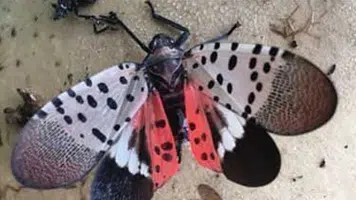
A new study from Penn State now says that the Spotted Laternfly is not doing as much damage as previously believed.
Research that was published in the journal “Environmental Entomology” is showing that that the invasive insect species has had no long-term effects on forests or ornamental trees. Their impact is being seen on a short-term basis, though as the growth of maple saplings is significantly reduced, but the new study shows that those trees eventually recover and grow over time.
In the study, scientists created a “worst-case scenario” for trees, as they had spotted lanternflies feed constantly on native trees, including silver maple, weeping willow and river birch along with other non-native trees. After four years, none of the trees died, but did see reduced growth in the first two years, and recovered when the feeding was less intense.
The insect, originally from China, was first spotted in Pennsylvania in Berks County in 2014. Since then, their presence has gone beyond Pennsylvania, and significant spotted lanternfly populations have been seen in parts of Western Pennsylvania.




Comments